Surprise Inside Easter Bundt Cakes – Delicious Treat
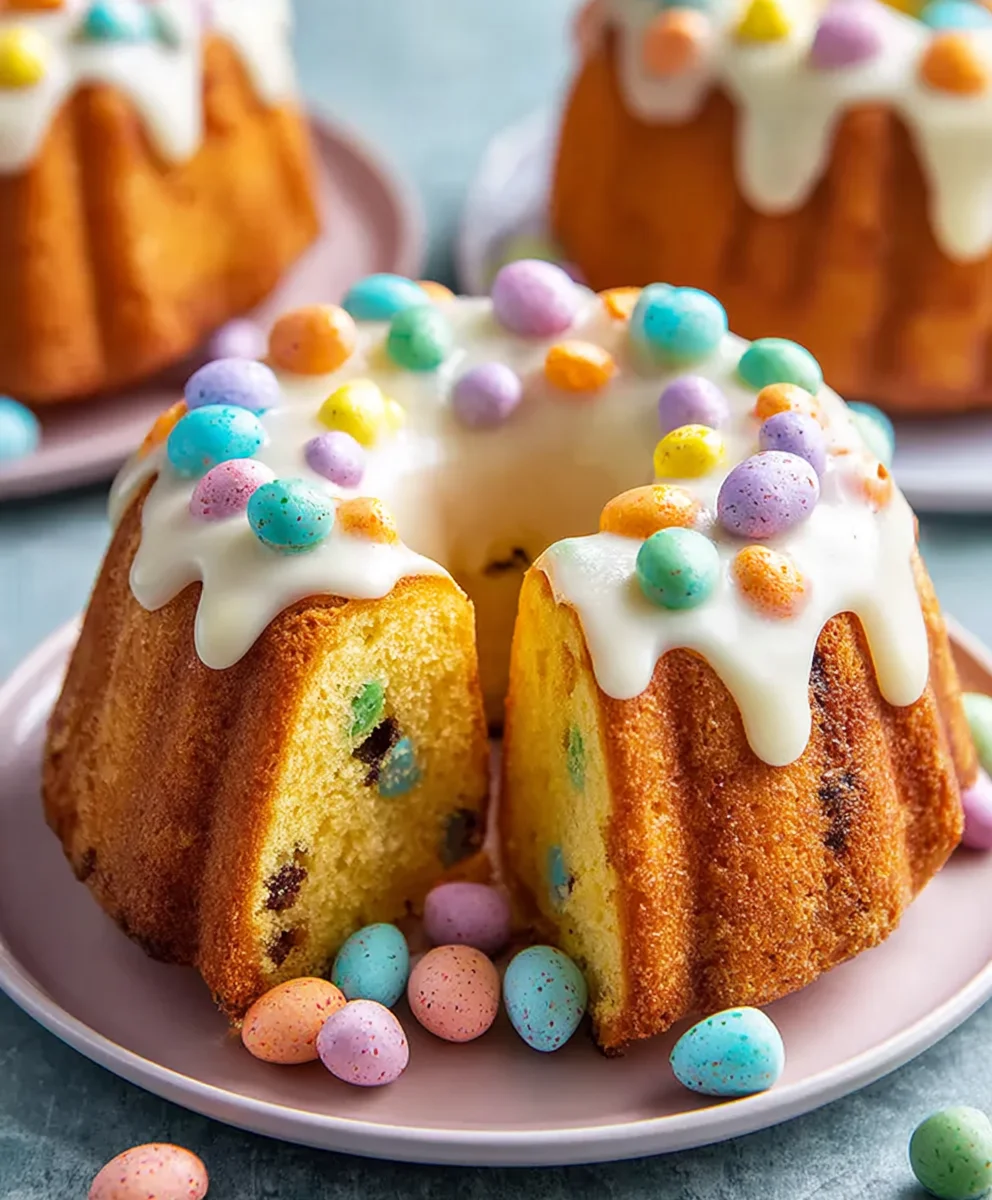
Surprise Inside Easter Bundt Cakes are an absolute delight for both the eyes and the taste buds, guaranteed to become the star of your spring celebrations. Imagin extracte a beautifully decorated bundt cake, its intricate swirls hinting at the magic within. But the real enchantment happens when you slice into it, revealing a vibrant, colorful surprise nestled in the center! This is precisely what makes these Surprise Inside Easter Bundt Cakes so incredibly popular. It’s the unexpected burst of joy, the playful reveal that brings smiles to faces young and old, making every slice a moment of pure happiness. What truly sets this particular recipe apart is not just the visual spectacle, but the delightful combination of tender, moist cake and a hidden sweet treasure that perfectly complements the overall flavor profile. Get ready to bake a cake that’s as fun to make as it is to share!

Ingredients:
- 1 box white cake mix (or your favorite homemade white cake recipe), prepared according to package directions or recipe instructions
- Approximately 2 cups of mixed Easter candy (such as M&Ms, jelly beans, mini Cadbury eggs, or any small, foil-wrapped chocolate candies that won’t melt excessively in the oven)
- 2 cups confectioners’ sugar (also known as powdered sugar or icing sugar)
- 2 tablespoons milk (whole milk or 2% will work best for a smooth glaze)
- 1 teaspoon lemon juice (freshly squeezed is ideal for a brighter flavor)
- 1/2 teaspoon vanilla extract (pure vanilla extract provides the best flavor)
- Gel food coloring in pastel Easter shades (pink, yellow, blue, green, lavender)
- Non-stick cooking spray or butter and flour for greasing your Bundt pan
Preparing the Batter and Candy
Step 1: Grease and Flour Your Bundt Pan
This is a crucial step for ensuring your beautiful Surprise Inside Easter Bundt Cakes release cleanly from the pan. Generously coat the inside of your Bundt pan with non-stick cooking spray, paying close attention to all the nooks and crannies of the intricate design. If you prefer, you can use softened butter and then lightly dust the greased pan with flour, tapping out any excess. This double protection will prevent your cakes from sticking and breaking apart. Make sure you’ve prepared your white cake mix or homemade batter according to the box or recipe instructions. This usually involves adding eggs, oil, and water, and then mixing until just combined. Overmixing can lead to a tough cake.
Step 2: Layering the Candy for the Surprise
Now for the fun part – creating the “surprise inside”! You want to ensure a good distribution of candy so that every slice reveals a colorful treasure. The best way to achieve this is to pour about one-third of your prepared cake batter into the bottom of your greased Bundt pan. Gently spread it evenly. Next, scatter a generous layer of your mixed Easter candy over the batter. Try to avoid piling it too high in one spot; a relatively even layer is best. Now, carefully pour another third of the cake batter over the candy layer, again spreading it gently to cover. Add another layer of Easter candy, making sure it’s not directly touching the sides or the center tube of the pan if possible, as this can sometimes lead to uneven baking. Finally, pour the remaining cake batter over the top, ensuring all the candy is enclosed. Smooth the top layer of batter to create an even surface.
Baking and Cooling
Step 3: Baking the Bundt Cakes
Preheat your oven according to the cake mix or recipe instructions, typically around 325-350 degrees Fahrenheit (160-175 degrees Celsius). Carefully place the filled Bundt pan on the center rack of your preheated oven. The baking time will vary depending on your specific oven and the size of your Bundt pan, but generally, it will take between 40-55 minutes. You can test for doneness by inserting a toothpick or a thin skewer into the thickest part of the cake, avoiding any candy pockets. If the toothpick comes out clean or with a few moist crum extractbs attached, your cake is ready. If it comes out with wet batter, continue baking for another 5-10 minutes and test again.
Step 4: Cooling the Cakes
Once baked, carefully remove the Bundt pan from the oven. It’s important to let the cakes cool in the pan for about 15-20 minutes before attempting to invert them. This allows the cakes to firm up slightly, making them less likely to break. After this initial cooling period, carefully invert the Bundt pan onto a wire cooling rack. You may need to gently tap the bottom of the pan or run a thin offset spatula around the edges to help loosen the cake. If the cake doesn’t release immediately, don’t force it; let it sit inverted for a few more minutes. Once the cakes have completely cooled on the wire rack (this can take 1-2 hours), you can proceed to the glazing stage.
Creating the Pastel Glaze
Step 5: Making and Coloring the Glaze
While your cakes are cooling, prepare the pastel glaze. In a medium bowl, whisk together the 2 cups of confectioners’ sugar, 2 tablespoons of milk, 1 teaspoon of lemon juice, and 1/2 teaspoon of vanilla extract until smooth and pourable. If the glaze is too thick, add milk a teaspoon at a time until you reach your desired consistency. If it’s too thin, gradually whisk in more confectioners’ sugar. Divide the glaze into separate small bowls, one for each pastel color you plan to use. Add a tiny amount of gel food coloring to each bowl and stir until you achieve vibrant, Easter-themed hues. Gel food coloring is potent, so start with a very small amount and add more as needed to get the perfect shade.
Step 6: Decorating the Surprise Inside Easter Bundt Cakes
Once your cakes are completely cool, it’s time to decorate! Drizzle the different colored glazes over the top of the Bundt cakes, letting them drip down the sides. You can alternate colors or create marbled effects by drizzling multiple colors next to each other and then gently swirling them with a toothpick. For a more festive look, you can also sprinkle extra Easter candy or edible glitter onto the wet glaze before it sets. The beauty of these cakes is the delightful surprise of colorful candy peeking out from each slice, making them a perfect centerpiece for your Easter celebration.
Conclusion:
You’ve now explored the delightful process of creating Surprise Inside Easter Bundt Cakes, a truly special treat for your Easter celebrations. We’ve covered everything from selecting the perfect cake batter to mastering the technique of hiding a colorful candy surprise within its perfectly formed dome. These cakes are not just a dessert; they’re an experience, bringin extractg joy and wonder to both the baker and the lucky recipient who gets to discover the hidden treasure.
For serving, these Surprise Inside Easter Bundt Cakes are fantastic on their own, allowing their beautiful appearance and delicious flavor to shine. However, you can elevate them further with a light dusting of powdered sugar to mimic snow or frost, a drizzle of white chocolate glaze, or a scattering of pastel-colored sprinkles around the base. They also pair wonderfully with a fresh fruit salad or a scoop of vanilla bean ice cream.
Don’t be afraid to get creative with variations! Consider adding a touch of lemon zest or almond extract to the batter for a different flavor profile. You can also experiment with different colored candies for the surprise, or even add a few chocolate chips to the batter itself. The possibilities are endless, and each creation will be uniquely yours. I encourage you to try this recipe and share the magic of these Surprise Inside Easter Bundt Cakes with your loved ones. Happy baking and happy Easter!
Frequently Asked Questions:
Q1: How do I prevent the candy surprise from melting or sinking to the bottom?
The key to a successful surprise is to ensure your batter is thick enough. If using a thinner batter, you might want to chill your candies slightly before adding them. Another tip is to create a pocket in the center of your bundt pan with some batter, place the candies in that pocket, and then gently cover them with more batter. This helps to anchor them in place and prevent them from sinking during baking.
Q2: Can I use a boxed cake mix for these Surprise Inside Easter Bundt Cakes?
Absolutely! A good quality boxed cake mix can be a fantastic shortcut. You might consider adding an extra egg or a touch of melted butter to the mix to enhance the richness and density, which can help support the candy surprise. Just follow the boxed cake mix instructions, and remember to test for doneness with a toothpick inserted into the cake, not the candy surprise.
Q3: What kind of candies work best for the surprise?
Smaller, solid candies that can withstand heat are ideal. Chocolate eggs (like M&M’s Minis or Cadbury Mini Eggs), jelly beans, or even colorful candy-coated chocolates work wonderfully. Avoid soft or gooey candies that might melt excessively and create a mess inside the cake. Ensure the candies are relatively uniform in size for an even distribution of the surprise.
Surprise Inside Easter Bundt Cakes – Delicious Treat
A festive white cake with a delightful surprise of colorful Easter candy hidden within, finished with a pastel glaze. Perfect for Easter celebrations.
Ingredients
-
1 box white cake mix (or your favorite homemade white cake recipe), prepared according to package directions or recipe instructions
-
2 cups of mixed Easter candy (such as M&Ms, jelly beans, mini Cadbury eggs, or any small, foil-wrapped chocolate candies)
-
2 cups confectioners’ sugar
-
2 tablespoons milk
-
1 teaspoon lemon juice
-
1/2 teaspoon vanilla extract
-
Gel food coloring in pastel Easter shades (pink, yellow, blue, green, lavender)
-
Non-stick cooking spray or butter and flour for greasing your Bundt pan
Instructions
-
Step 1
Grease and flour your Bundt pan generously with non-stick cooking spray or butter and flour. Prepare your white cake mix or homemade batter according to the box or recipe instructions. -
Step 2
Pour one-third of the batter into the bottom of the Bundt pan. Scatter a generous layer of mixed Easter candy over the batter. Pour another third of the cake batter over the candy, spreading gently. Add another layer of Easter candy. Pour the remaining cake batter over the top, ensuring all candy is enclosed. Smooth the top layer. -
Step 3
Preheat your oven to 325-350 degrees Fahrenheit (160-175 degrees Celsius). Bake for 40-55 minutes, or until a toothpick inserted into the thickest part of the cake (avoiding candy pockets) comes out clean or with moist crumbs. -
Step 4
Let the cakes cool in the pan for 15-20 minutes. Invert the Bundt pan onto a wire cooling rack and let the cakes cool completely (1-2 hours). -
Step 5
While the cakes cool, prepare the glaze. In a medium bowl, whisk together 2 cups of confectioners’ sugar, 2 tablespoons of milk, 1 teaspoon of lemon juice, and 1/2 teaspoon of vanilla extract until smooth. Add milk or confectioners’ sugar as needed for desired consistency. Divide the glaze into separate bowls and tint with gel food coloring to achieve pastel Easter shades. -
Step 6
Once the cakes are completely cool, drizzle the different colored glazes over the top, letting them drip down the sides. Optionally, swirl colors with a toothpick or sprinkle with extra Easter candy or edible glitter before the glaze sets.
Important Information
Nutrition Facts (Per Serving)
It is important to consider this information as approximate and not to use it as definitive health advice.
Allergy Information
Please check ingredients for potential allergens and consult a health professional if in doubt.