
Easy Miso Soup Recipe – Delicious & Quick
Miso Soup Recipe: Embark on a culinary journey that will transport your taste buds straight to the heart of Japan with this incredibly comforting and surprisingly simple Miso Soup Recipe. There’s a reason why this humble broth has become a cornerstone of Japanese cuisine, gracing tables from bustling izakayas to serene family dinners. It’s more than just a soup; it’s a warm hug in a bowl, a delicate dance of savory, umami-rich flavors that awakens the senses. What makes this Miso Soup Recipe so beloved? It’s the perfect balance of salty miso paste, fragrant dashi broth, and often, a scattering of tender tofu and vibrant green onions. This dish is incredibly adaptable, allowing for personal touches that make it uniquely yours, proving that delicious can also be effortlessly achievable.
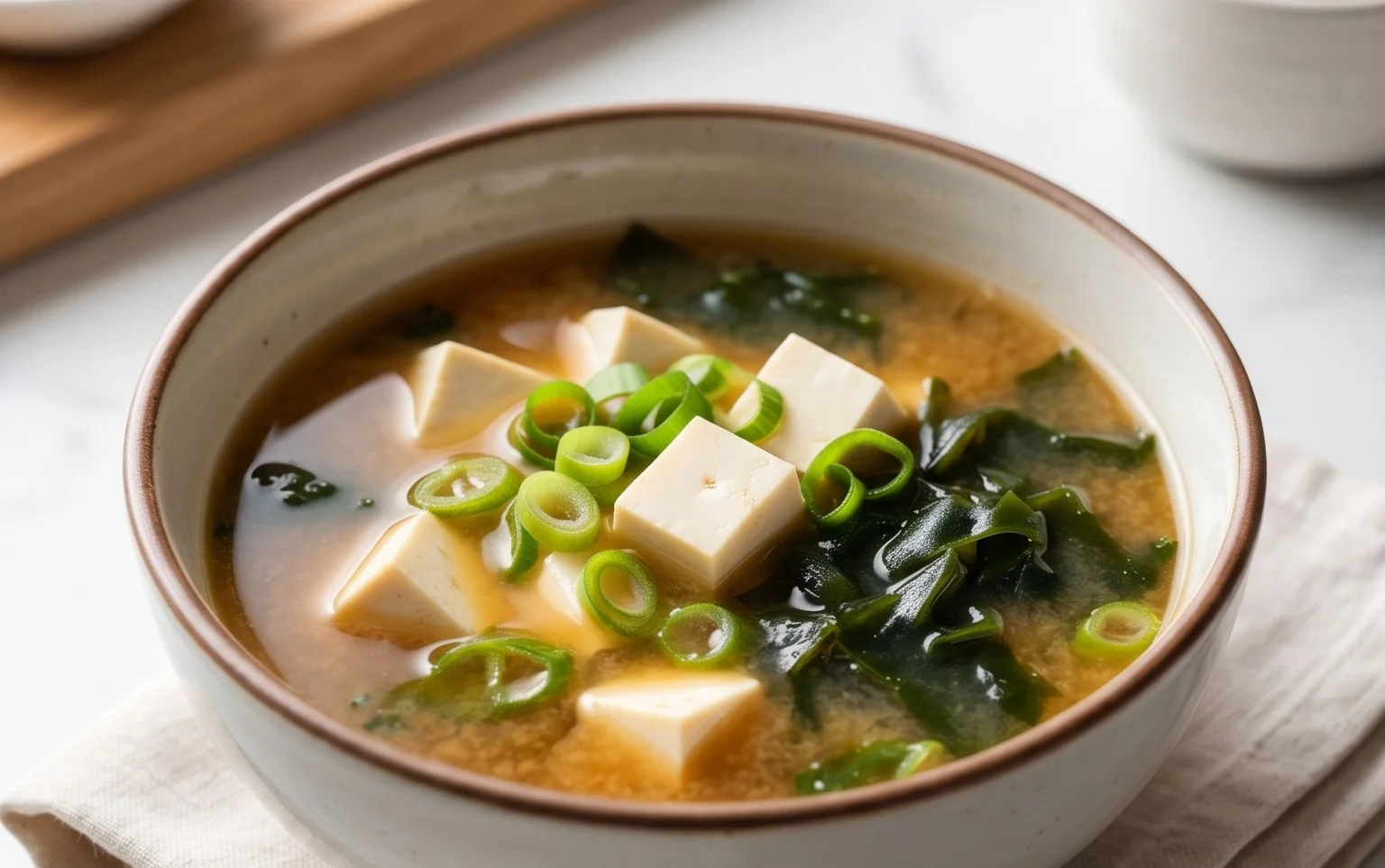
Miso Soup Recipe
There’s something incredibly comforting and deeply satisfying about a warm bowl of miso soup. It’s a staple in Japanese cuisine for a reason – it’s nourishing, flavorful, and surprisingly easy to make at home. Forget those packets of instant soup; with just a few simple ingredients, you can create a truly authentic and delicious miso soup that will warm you from the inside out. This recipe is perfect for a light breakfast, a side dish to any meal, or a soothing late-night snack. Let’s get started!
Ingredients:
Preparing Your Miso Soup
The beauty of miso soup lies in its simplicity. The key to a fantastic bowl is using good quality dashi and fresh miso paste. Dashi is a fundamental Japanese stock that forms the base of many dishes, and while you can buy it in instant granules or liquid form, making your own from kombu (kelp) and katsuobushi (bonito flakes) will elevate your soup to another level. However, for a quick and convenient option, good quality store-bought dashi is perfectly acceptable. Similarly, the type of miso paste you choose will significantly impact the flavor. White miso (shiro miso) is mild and slightly sweet, red miso (aka miso) is robust and earthy, and awase miso is a blend of the two. Feel free to experiment to find your favorite!
Cooking Instructions
1. Begin extract by rehydrating your dried seaweed. In a small bowl, place the heaping tablespoon of dried seaweed and cover it with warm water. Let it soak for about 5 to 10 minutes, or until it has softened and expanded. Once rehydrated, gently drain any excess water and set it aside. If you’re using wakame, it will likely break apart into smaller, manageable pieces, which is perfect for soup. This step is crucial as dried seaweed can be quite tough and unpalatable if added directly to the soup.
2. Next, prepare your dashi base. Pour the 2½ cups of dashi into a medium-sized saucepan. Place the saucepan over medium heat. We want to bring the dashi to a gentle simmer, not a rolling boil. A gentle simmer will help to infuse the flavors without making the dashi cloudy or diminishing its delicate taste. While the dashi is heating, you can prepare your tofu. If it’s not already cut, carefully slice the silken tofu into small, bite-sized cubes, about ½-inch squares. Silken tofu is delicate, so handle it with care to avoid breaking it apart too much at this stage.
3. Once the dashi is simmering gently, it’s time to add the rehydrated seaweed. Carefully add the softened seaweed to the pot. Stir gently to distribute it evenly throughout the dashi. Let it simmer for another 2 to 3 minutes, allowing the seaweed to further soften and release its subtle oceanic flavor into the broth. This short simmering time ensures the seaweed is tender and fully integrated into the soup.
4. Now comes the most important step: dissolving the miso paste. It’s vital to do this off the heat to preserve the beneficial probiotics in the miso and to prevent its delicate flavor from being destroyed by excessive heat. Ladle out about ½ cup of the hot dashi into a small bowl. Add your miso paste to this bowl, starting with 2 tablespoons. Use a whisk or a fork to thoroughly dissolve the miso paste into the dashi, creating a smooth, lump-free mixture. This step is crucial for achieving a well-integrated miso flavor and avoiding clumps of miso in your soup. You can always add more miso later if you prefer a stronger flavor.
5. Gently add the dissolved miso mixture back into the saucepan with the rest of the dashi and seaweed. Stir well to combine everything thoroughly. At this point, you can add the prepared silken tofu pieces to the soup. Be very gentle when adding the tofu, as it’s prone to breaking. Allow the soup to heat through for just another minute or two, but absolutely do not let it boil after the miso has been added. Boiling miso soup can make it taste bitter and can destroy its beneficial properties. The soup should be hot enough to serve, but not boiling. Taste the soup and adjust the miso paste if necessary. If you desire a stronger miso flavor, dissolve another ½ tablespoon or so in a little hot dashi and add it to the pot.
Serving Your Miso Soup
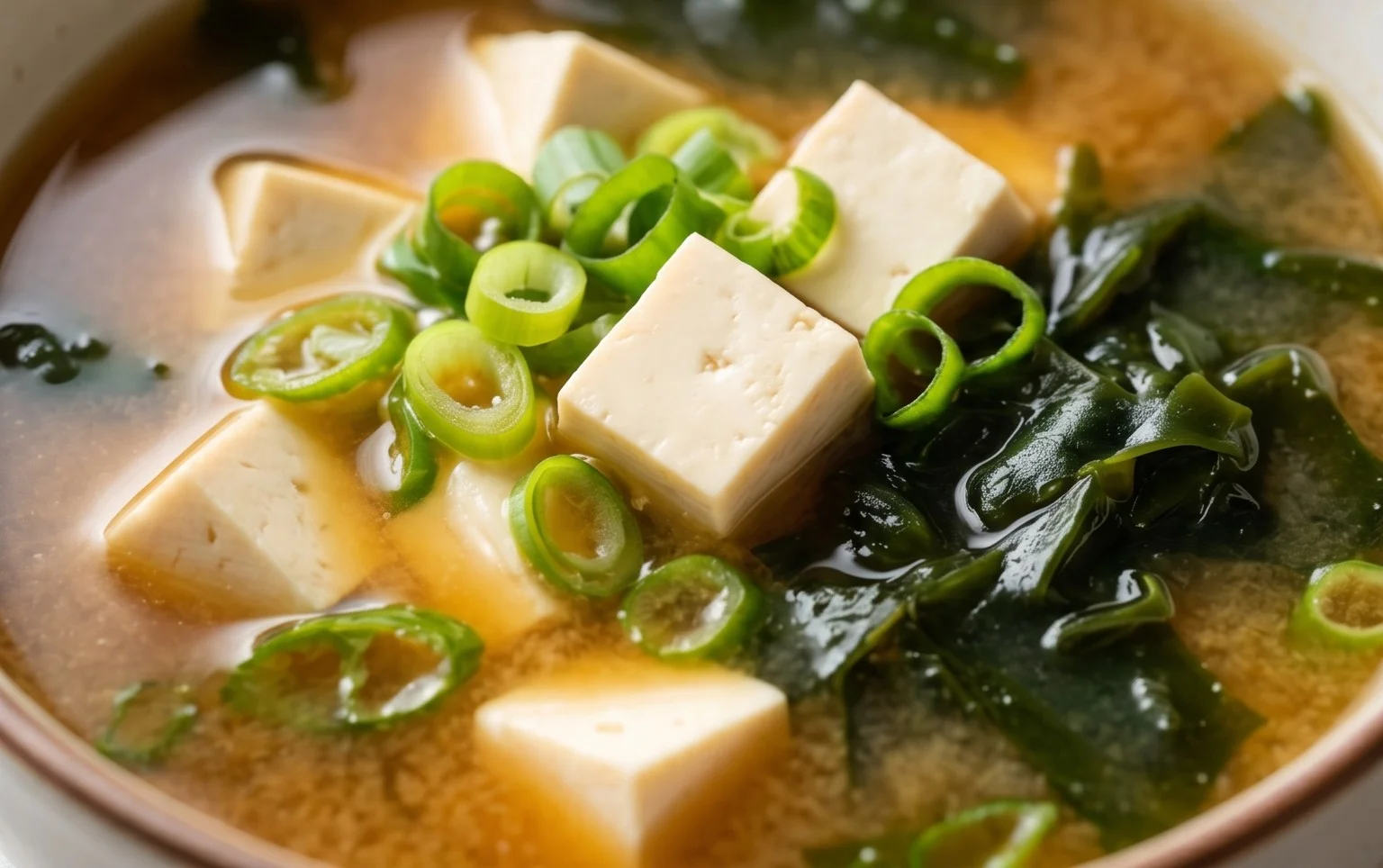
Ladle the hot miso soup into individual serving bowls. Garnish generously with the chopped scallions. The fresh, sharp bite of the scallions provides a wonderful contrast to the savory, umami-rich broth. Serve immediately and enjoy the comforting warmth and deliciousness of your homemade miso soup! This recipe is a fantastic foundation, and you can easily customize it by adding other ingredients like thinly sliced mushrooms, spinach, or even a sprinkle of toasted sesame seeds. Enjoy this simple yet profoundly satisfying dish!
Conclusion:
There you have it! This miso soup recipe is truly a gem. Its beauty lies in its simplicity, allowing the rich, umami-packed flavor of miso to shine. It’s incredibly quick to prepare, making it perfect for a nourishing weeknight meal or a comforting starter any time of the day. The versatility of this foundational recipe means you can easily customize it to your liking. Enjoy it as is, or explore the many delicious variations we discussed. I truly encourage you to give this delightful miso soup recipe a try – I promise you won’t be disappointed!
For serving suggestions, this warm and inviting soup pairs beautifully with a variety of dishes. It’s a classic accompaniment to sushi or tempura, but it also makes a satisfying light lunch on its own, especially when paired with a simple rice ball or a slice of grilled fish. For a heartier meal, consider adding cooked noodles, tofu cubes, or even shredded chicken. Don’t hesitate to experiment with different ingredients; that’s part of the fun of homemade miso soup!
Frequently Asked Questions:
What kind of miso paste should I use?
The most common types are white miso (shiro miso), red miso (aka miso), and mixed miso (awase miso). White miso is the mildest and sweetest, making it excellent for begin extractners. Red miso is stronger and more robust, offering a deeper flavor. Mixed miso provides a balanced profile. Feel free to use your favorite or experiment with different types to discover your preference!
Can I make this miso soup recipe ahead of time?
While the broth can be made ahead and reheated, it’s best to add the miso paste and delicate ingredients like tofu and scallions just before serving. Miso paste can lose some of its flavor and beneficial properties when boiled for extended periods. So, for the freshest and most flavorful soup, a quick assembly at the end is key.
What are some healthy additions I can make to my miso soup?
This recipe is already quite healthy, but you can easily boost its nutritional value. Consider adding leafy greens like spinach or bok choy, other vegetables like thinly sliced carrots or mushrooms, or protein sources like edamame or silken tofu. A sprinkle of sesame seeds or a drizzle of chili oil can also add extra flavor and nutrients.
Miso Soup Recipe
A simple and comforting traditional Japanese miso soup.
Ingredients
-
2½ cups Dashi
-
1 heaping tablespoon dried seaweed
-
4 oz silken tofu (cut into small pieces)
-
2-2½ tablespoons miso paste (or to taste)
-
1 tablespoon scallion (chopped)
Instructions
-
Step 1
In a pot, bring the Dashi to a simmer. -
Step 2
Add the dried seaweed and simmer for 1-2 minutes until rehydrated. -
Step 3
Reduce the heat to low. In a small bowl, whisk the miso paste with a ladleful of the warm Dashi until smooth. This prevents clumps. -
Step 4
Gently stir the dissolved miso paste back into the pot. -
Step 5
Add the silken tofu pieces and heat through for about 1 minute. Do not boil after adding miso. -
Step 6
Ladle the soup into bowls and garnish with chopped scallions.
Important Information
Nutrition Facts (Per Serving)
It is important to consider this information as approximate and not to use it as definitive health advice.
Allergy Information
Please check ingredients for potential allergens and consult a health professional if in doubt.