Japchae Recipe Korean Glass Noodle Stir Fry – Delicious
Japchae is a dish that truly sings with flavor and texture, a vibrant celebration of Korean cuisine that I absolutely adore. If you’ve ever experienced the joy of perfectly stir-fried glass noodles, you know exactly what I’m talking about. This delightful Korean glass noodle stir fry is more than just a meal; it’s an experience. What makes Japchae so universally loved? It’s the incredible balance of sweet, savory, and slightly nutty notes, all brought together by the delightful chegrape juicess of the sweet potato starch noodles. Each bite offers a symphony of colors and tastes with tender vegetables, savory mushrooms, and often a hint of succulent protein. It’s this harmonious blend of ingredients and textures that makes Japchae a standout, perfect for gatherings or as a comforting weeknight treat. Get ready to discover how to create this iconic Korean dish in your own kitchen!
Japchae (Korean Glass Noodle Stir Fry)
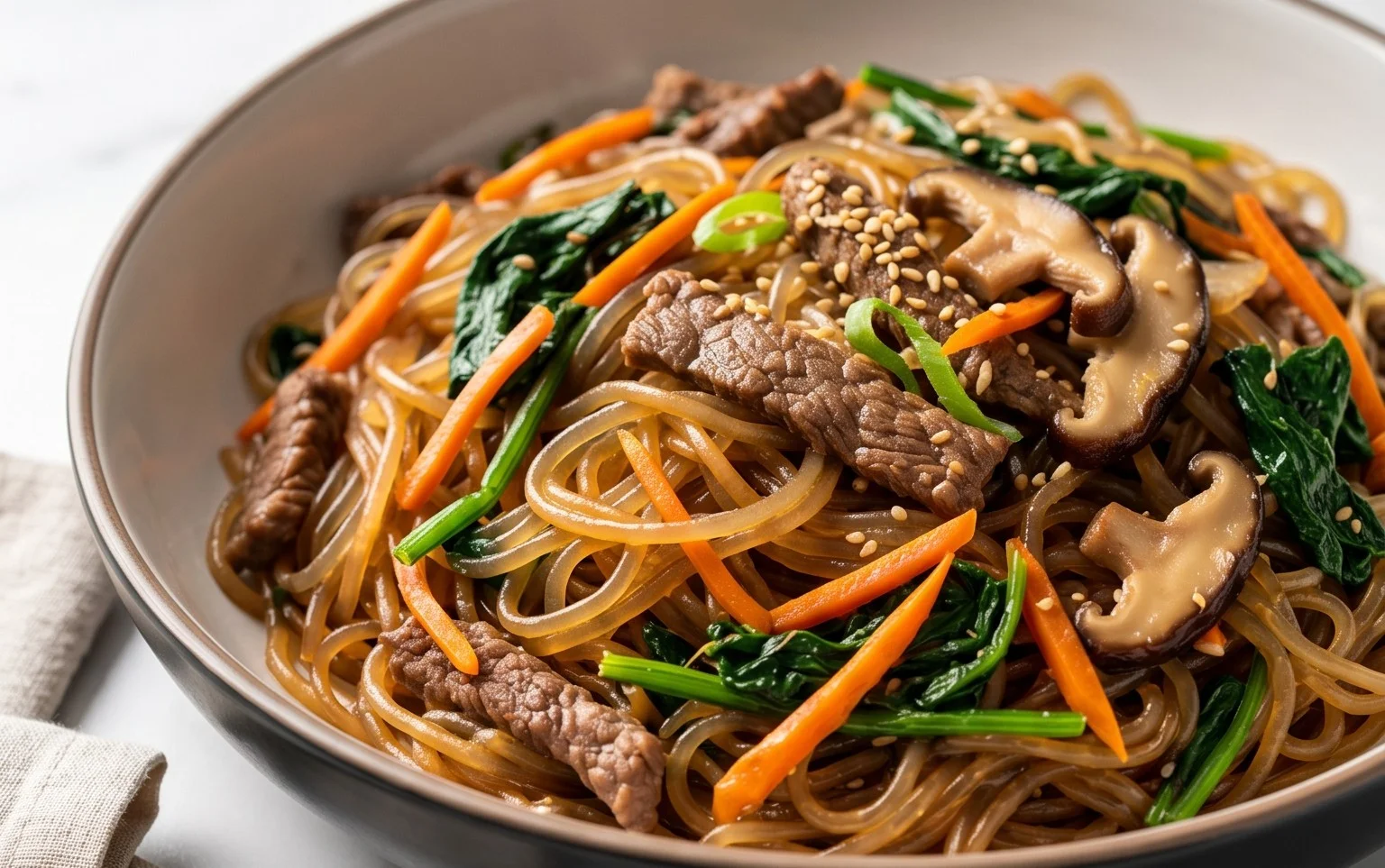
Japchae is a beloved Korean dish that’s as beautiful to look at as it is delicious to eat. It’s a vibrant stir-fry featuring chewy glass noodles, colorful vegetables, and tender protein, all coated in a savory-sweet sesame sauce. While it might seem like a lot of components, each step is quite manageable, and the end result is a wonderfully balanced and satisfying meal that’s perfect for any occasion, from a weeknight dinner to a festive gathering. I love how versatile Japchae is – you can easily customize the vegetables or protein to your liking, making it a staple in my kitchen.
Ingredients:
Cooking Instructions:
Preparing Japchae involves several distinct stages, each contributing to the final masterpiece. Don’t be intimidated by the number of steps; we’ll break them down to make it a breeze.
1. Prepare the Noodles and Protein:
Begin extract by rehydrating the sweet potato glass noodles. This is crucial for achieving that signature chewy texture. Place the dried noodles in a large heatproof bowl and cover them with boiling water. Let them soak for about 10-15 minutes, or until they are pliable and no longer brittle. Once softened, drain them thoroughly. Now, it’s time to prepare the beef. In a medium bowl, toss the thinly sliced beef with a pinch of salt, black pepper, and about 1 tablespoon of soy sauce. Let it marinate while you prepare the other ingredients. This simple marinade will infuse the beef with flavor.
2. Stir-fry the Vegetables:
This is where the vibrant colors of Japchae come to life. Heat a tablespoon of oil in a large wok or skillet over medium-high heat. Add the sliced yellow onion and stir-fry for about 2-3 minutes until they begin extract to soften and turn translucent. Next, add the julienned carrots and sliced mushrooms. Continue to stir-fry for another 3-4 minutes until the vegetables are tender-crisp. You want them to retain a slight bite, not become mushy. Season lightly with salt and pepper. Once the vegetables are cooked to your liking, remove them from the wok and set them aside in a separate bowl.
3. Cook the Beef and Eggs:
In the same wok, add a little more oil if needed and increase the heat slightly to medium-high. Add the marinated beef in a single layer, if possible, to ensure it browns nicely. Stir-fry the beef until it’s cooked through and no longer pink. This should only take a few minutes. Remove the cooked beef and set it aside with the stir-fried vegetables. Now, for the egg garnish. In a clean bowl, whisk the two eggs with a pinch of salt. Heat a lightly oiled non-stick pan over medium-low heat. Pour in the beaten eggs and cook them like a thin omelet, until set. Once cooled slightly, roll up the egg omelet and thinly slice it into ribbons. This will be a beautiful and delicate garnish.
4. Assemble and Sauce the Japchae:
Now for the part where all the magic comes together. In a large bowl, combine the drained glass noodles, the stir-fried vegetables, the cooked beef, and the cut green onions. In a small bowl, whisk together the soy sauce, honey, brown sugar, and toasted sesame oil. This is your signature Japchae sauce! Pour this sauce over the noodle and vegetable mixture. Using your hands (which is often the easiest way to ensure even coating) or a pair of tongs, gently toss everything together until the noodles and ingredients are well coated with the savory-sweet sauce. Be careful not to break the noodles.
5. Final Stir-fry and Garnish:
To meld all the flavors and slightly cook down the spinach, heat a tablespoon of oil in the same wok or skillet over medium-high heat. Add the sauced noodle mixture. Stir-fry for about 3-5 minutes, continuously tossing, until the noodles are heated through and slightly glossy. In the last minute of cooking, add the packed baby spinach. Stir-fry just until the spinach wilts. This happens very quickly. Taste and adjust seasoning with salt and pepper if needed. Serve the Japchae immediately in a large serving dish. Garnish generously with the sliced egg ribbons and a sprinkle of toasted sesame seeds, if you’re using them. The combination of textures and flavors in Japchae is truly something special, and this process ensures you get it just right every time. Enjoy this comforting and flavorful Korean classic!
Conclusion:
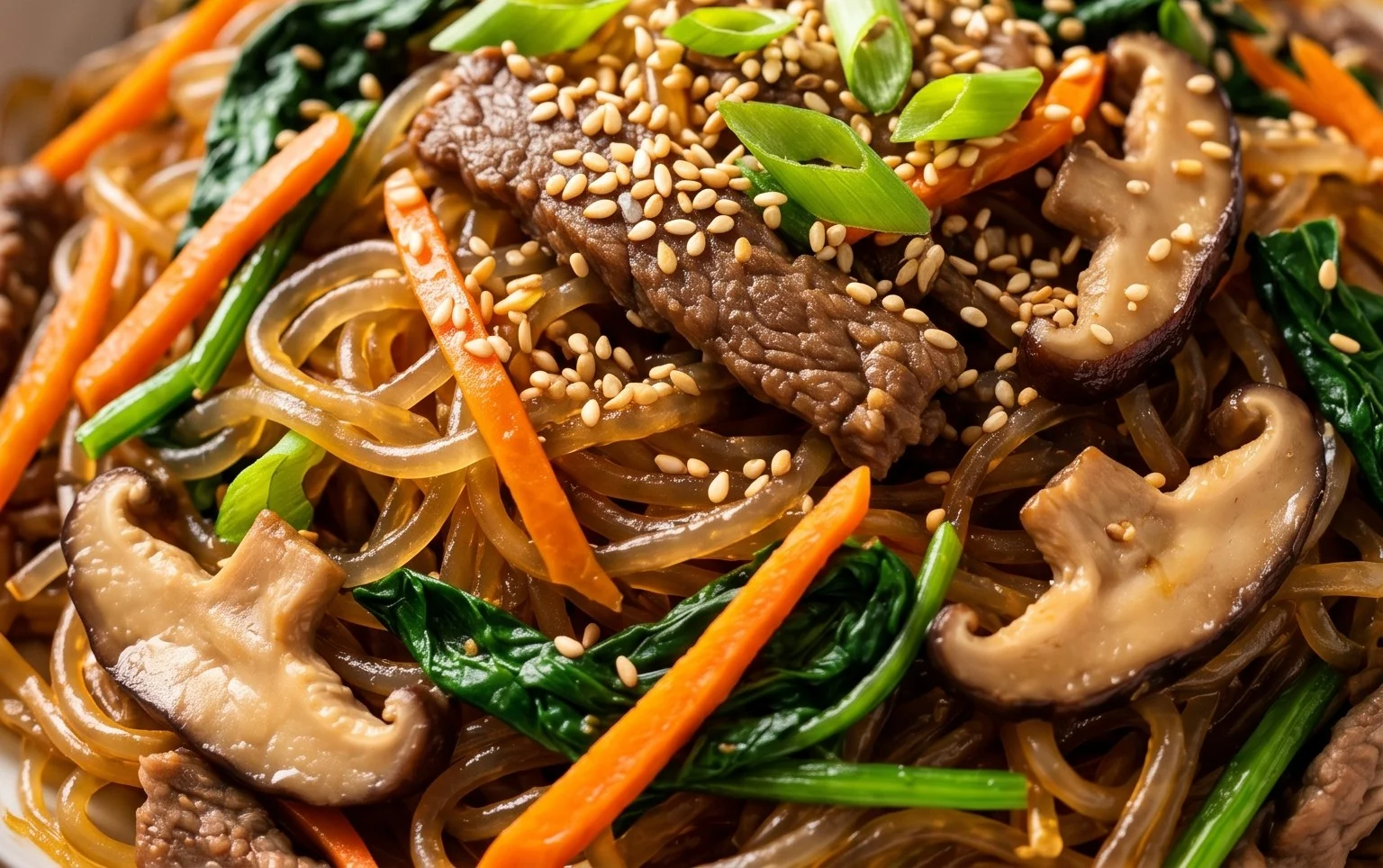
There you have it – a simple yet incredibly satisfying recipe for authentic Japchae, Korean glass noodle stir fry! What makes Japchae so wonderful is its delightful balance of textures and flavors. The chewy glass noodles, tender vegetables, and savory marinated protein come together in a harmonious dance that’s both comforting and vibrant. It’s a dish that truly celebrates fresh ingredients and the art of simple, delicious cooking. Whether you’re looking for a flavorful vegetarian option or a hearty main course, this Japchae recipe is versatile enough to please everyone.
I truly encourage you to give this Japchae recipe a try. Don’t be intimidated by the ingredient list; the process is straightforward, and the results are incredibly rewarding. You’ll be amazed at how quickly you can whip up this beloved Korean classic in your own kitchen. Enjoy it hot off the stove, or even slightly chilled – it’s delicious either way!
Frequently Asked Questions:
What are the best serving suggestions for Japchae?
Japchae is wonderfully versatile! It shines as a standalone meal, perfect for lunch or a light dinner. It also makes an excellent side dish, complementing Korean barbecue, grilled meats, or even simple rice and kimchi. For a more festive presentation, serve it family-style in a large bowl, allowing everyone to help themselves.
Can I make Japchae vegetarian or vegan?
Absolutely! To make it vegetarian, simply omit the meat and focus on a generous medley of colorful vegetables like carrots, spinach, mushrooms, bell peppers, and onions. For a vegan version, ensure your soy sauce is vegan-friendly and consider adding pan-fried tofu or tempeh for protein. It remains incredibly delicious and satisfying!
What is the best way to store leftover Japchae?
Leftover Japchae can be stored in an airtight container in the refrigerator for up to 3 days. The noodles might become a bit firmer upon cooling. To reheat, gently stir-fry it in a pan with a splash of water or broth over medium heat until the noodles are softened and everything is heated through. You can also microwave it, stirring halfway through for even heating.
Japchae (Korean Glass Noodle Stir Fry)
A vibrant and flavorful Korean glass noodle stir-fry featuring tender beef, crisp vegetables, and a savory-sweet sauce.
Ingredients
-
12 ounces sweet potato glass noodles
-
16 ounces beef (cut into strips like flank, skirt, ribeye)
-
2 large eggs, beaten
-
1 large carrot, peeled and julienned
-
1 medium yellow onion, thinly sliced
-
3 mushrooms, thinly sliced
-
2 cups baby spinach, packed
-
2 stalks green onion, cut into 1 inch pieces
-
oil, for cooking
-
toasted sesame seeds, for garnish (optional)
-
salt and black pepper, as needed
-
7 tablespoons soy sauce (light sodium)
-
3 tablespoons honey
-
2 tablespoons brown sugar
-
2 tablespoons toasted sesame oil
Instructions
-
Step 1
Cook the glass noodles according to package directions. Drain, rinse with cold water, and cut into shorter lengths with scissors. Set aside. -
Step 2
In a bowl, toss the beef strips with 1 tablespoon soy sauce, 1 teaspoon honey, 1 teaspoon brown sugar, salt, and pepper. Marinate for at least 10 minutes. -
Step 3
Heat a tablespoon of oil in a large skillet or wok over medium-high heat. Add the marinated beef and stir-fry until cooked through. Remove beef from skillet and set aside. -
Step 4
In the same skillet, add a little more oil if needed. Stir-fry the onions and carrots for 2-3 minutes until slightly softened. Add the mushrooms and cook for another 2 minutes. -
Step 5
Add the cooked noodles, spinach, and green onions to the skillet. Stir in the remaining soy sauce, honey, and brown sugar. Toss to combine. -
Step 6
Add the cooked beef back to the skillet. Drizzle with toasted sesame oil and stir-fry for another 2-3 minutes until everything is heated through and well combined. -
Step 7
Season with salt and pepper to taste. Garnish with toasted sesame seeds before serving, if desired.
Important Information
Nutrition Facts (Per Serving)
It is important to consider this information as approximate and not to use it as definitive health advice.
Allergy Information
Please check ingredients for potential allergens and consult a health professional if in doubt.